Spy Gadgets Used by Real Detectives: The CIA Museum List for Kids
Real spy gadgets are quieter, smaller and stranger than the movie versions, and most of them were built to solve one very specific problem. A CIA dragonfly drone that flew 200 metres in 60 seconds but could not handle a crosswind. A camera light enough to strap to a pigeon’s chest. A fake coin that hid a message. This list rounds up the gadgets that actually existed, what they were really for, and the story behind each one, drawn from the CIA’s own museum records and the International Spy Museum’s collection.
If you have already tried our guide to real cipher and secret codes, this is the next level: the hardware spies carried. Every fact below comes from a museum or government source you can visit yourself, because real espionage history is more fun than invention.
The dragonfly drone: CIA’s Insectothopter
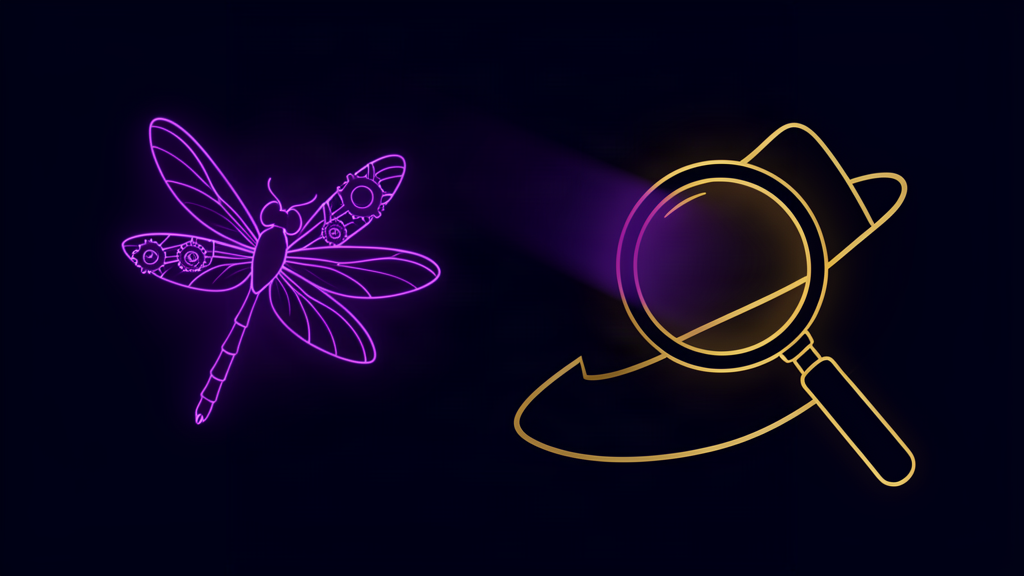
In the 1970s, CIA’s Office of Research and Development built a device called the Insectothopter: an insect-sized flying machine shaped like a dragonfly, intended to prove that micro unmanned aerial vehicles could collect intelligence (CIA). It had a tiny gas-powered engine that flapped its wings, with excess fuel vented out the rear for extra thrust. The flying part worked. Then the crosswinds arrived.
In crosswinds over 5 miles per hour, the little dragonfly got blown off course. The engineers also struggled to design a camera light enough to keep it airborne. The Insectothopter never became an operational gadget, but it proved the concept decades before consumer drones existed, and a model of it is displayed at the International Spy Museum (Spy Museum).
The pigeon camera
Before satellites could photograph your street, intelligence agencies tried pigeons. CIA’s Office of Research and Development built a camera small and light enough to strap to a pigeon’s chest with a tiny harness (History.com). The bird flew over a target on its way home, while a battery-powered motor advanced the film and cocked the shutter at intervals.
Why pigeons? They are everywhere, nobody looks twice at one, and they flew at a few hundred feet, far closer to the ground than the U-2 spy plane’s tens of thousands of feet or the Corona satellite’s orbital altitude. The photos from a pigeon were sharper than anything else available at the time. The birds were trained, released, and returned home with the intelligence in a harness on their chest.
Charlie the robot catfish
Yes, a robot fish, built by a real intelligence agency. CIA’s Office of Advanced Technologies and Programs developed “Charlie” and “Charlene”, unmanned underwater vehicles shaped like catfish, to study aquatic robot technology (CIA). Charlie had a pressure hull, ballast system, radio communications in the body and propulsion in the tail, controlled by a wireless line-of-sight handset.
His mission: swim upstream, collect a water sample near a site of interest, maybe close to a reactor or industrial facility, and return it for testing. Water can carry traces of what happens on the shore, and a robotic fish draws less attention than a boat.
The dead drop spike
Not every gadget is high-tech. One of the simplest and most used was the dead drop spike: a hollow, pointed metal container that could be pushed into the ground to hold messages, documents or film (History.com). A spy would leave it at a prearranged spot, and their handler would collect it later. No meeting, no eye contact, no risk of being seen together.
The principle matters more than the hardware: intelligence work runs on moving information without moving people. A spike, a hollow coin, or a chalk mark on a lamppost all serve the same function. In our post on real codes used by spies, you learned how messages were hidden; the spike is where they were hidden physically.
The hollow silver dollar
An ordinary-looking Eisenhower silver dollar, opened, revealed a hollow interior big enough for a message or a small strip of film (History.com). The coin looked and felt like pocket change, which was the whole idea: concealment works best when the hiding place is boring. Counterintelligence officers were trained to check coins, so the good ones were modified so convincingly that even an experienced enemy agent could miss them.
Kids can test the principle at home with a simple game: hide a note in an object so ordinary that nobody picks it up. The harder the object is to notice, the better the concealment, exactly the logic that made the silver dollar work.
The cigarette pack camera
The Tessina was a miniature spring-wound 35mm film camera, small and quiet enough to fit inside a modified cigarette pack (History.com). An operative could hold it at their side, press the shutter almost invisibly, and capture documents, rooms or meetings without anyone noticing a camera at all.
Miniaturisation was the entire game in that era. Every gram mattered, because a camera that is too heavy or too obvious fails at its one job. The Tessina’s engineering was so good that civilian photographers bought them too; it was a real commercial product that found a second life in espionage.
The pipe radio
This one sounds like fiction and is not. CIA’s technical staff built a smoking pipe fitted with a subminiature radio receiver, so the user could hear incoming audio through bone conduction, vibrations travelling from the jaw to the ear canal (History.com). To anyone watching, the agent was just a man smoking a pipe.
The bone conduction trick is real physics and is used today in some hearing aids and consumer headphones. The pipe version dates from an era when a hidden earpiece would have been spotted instantly; jaw-conduction was the stealth audio solution of its day.
Fake rocks that listen
Seismic intruder detection devices were camouflaged as sticks and rocks and placed near sensitive locations. They sensed movement of people, vehicles or animals up to 300 metres away, ran on tiny power cells, and relayed what they sensed via coded impulses (History.com). The CIA even made a version disguised as tiger droppings for use in Vietnam, on the theory that nobody picks up tiger scat (CIA).
These were, in effect, the grandparents of modern motion sensors. The design challenge was not the electronics, it was the disguise: the device had to look so natural that it survived weather, animals and curious humans for months.
Acoustikitty, the cat that did not take orders
The strangest project on this list is also the best known myth. Starting in 1964, CIA explored wiring a cat with a microphone in one ear, a transmitter under the skin and an antenna woven into its fur, to eavesdrop on outdoor conversations (CIA). The technology worked in the lab. The cat did not. During field tests it went wherever it felt like, and the program was ended in 1967 without ever being used.
CIA itself has debunked the darker rumours: the implants were done under veterinary conditions and the cat was unharmed, and the famous story about the cat being hit by a taxi came from a former officer who later admitted he made it up as a joke. Truth: the gadget worked, the cat did not cooperate, which is a lesson every engineer eventually learns.
Why the real gadgets beat the movie versions
Movie spy gear does everything and looks cool. Real spy gear does one thing and looks boring, because the design constraint was never “impressive”, it was “must not be noticed”. Every gadget above follows the same rules:
- It hides inside something so ordinary that nobody looks twice.
- It does exactly one job.
- It fails quietly, without drawing attention to the user.
That is also what makes real espionage history such good material for mystery stories. The tension is not in the laser watch, it is in whether the ordinary-looking object passes unnoticed. If you want to see more of this world, the stories on how Agent 5 solves crimes borrow directly from this history.
Where to see real spy gadgets
You can visit much of this history. The International Spy Museum in Washington DC holds the Insectothopter model and hundreds of other artefacts. The CIA Museum is not open to the public, but the agency publishes photographs and stories online, and declassified documents live in the CIA FOIA reading room. For South African readers, some of the best collections are digital: both museums maintain online archives worth an afternoon.
Frequently asked questions
What was the Insectothopter and did it work?
The Insectothopter was a CIA-built, dragonfly-shaped micro drone from the 1970s, with a tiny gas engine that flapped its wings and laser guidance. It flew 200 metres in 60 seconds but could not stay on course in crosswinds above 5 miles per hour, so it never became operational. It proved the concept behind today’s insect-sized drones.
Did the CIA really strap cameras to pigeons?
Yes. CIA’s Office of Research and Development built a camera light enough for a pigeon to carry in a chest harness. The bird flew over a target and the camera photographed it from a few hundred feet, far closer than planes or satellites could. The photos were sharper than any other aerial imagery of the era.
What is a dead drop?
A dead drop is a hiding place where a spy leaves material, such as a hollow spike pushed into the ground or a hollow coin on a ledge, and an accomplice collects it later. The two never meet, which protects both. It is one of the oldest tricks in espionage and still taught in tradecraft today.
Did the CIA really try to train a spy cat?
Yes. Project Acoustikitty began in 1964, with a microphone implanted in a cat’s ear and a transmitter under its skin. The technology worked, but the cat ignored its training and went wherever it pleased, so the program ended in 1967 without operational use. CIA has confirmed the cat was unharmed and the famous taxi story was a joke.
Where can kids see real spy gadgets?
The International Spy Museum in Washington DC displays the Insectothopter and hundreds of real gadgets. The CIA publishes museum artefacts and espionage stories on its website, and the CIA FOIA reading room holds declassified documents. All three are free to browse online, which makes them perfect for a school project or a rainy afternoon.
The best spy gadgets were never the flashiest. They were the pigeon, the coin, the dragonfly that almost worked, each solving one problem so well that the solution disappeared into plain sight. That is the real magic of espionage history, and it is better than anything Q ever built.